

A project can meet its budget and still become expensive when low-price decisions increase rework, energy use, maintenance or downtime. You will be able to set a defensible cost baseline, separate essential performance from optional scope, compare savings ideas on whole-life value and control changes before they become final-account exposure.
Key takeaways
- Define required performance before comparing supplier prices.
- Build a cost baseline that separates fixed, flexible and risk-driven costs.
- Verify substitutions against capacity, compatibility, maintenance and warranty requirements.
- Prioritize savings that reduce whole-life cost without creating delivery risk.
Optimize the Required Function, Not Just the Purchase Price
A cheaper pump is not a saving if it cannot deliver the required flow, pressure, duty cycle or reliability. Construction cost optimization means achieving the project’s defined performance at the lowest justified total cost, including purchase, delivery, installation, commissioning, operation, maintenance and replacement—not simply accepting the lowest supplier quote.
Value engineering protects project needs by testing the function behind each specification. It measures the existing solution’s cost, develops alternatives and checks each option against performance requirements, safety, durability, programme, interfaces and life-cycle consequences. A lower-priced material that causes rework, longer installation or premature failure is not value engineering; it is deferred cost.
Design-to-budget turns the approved budget into cost targets for building systems and work packages before detailed design is complete. Use this process:
- Separate must-have scope from nice-to-have scope, and record the required output of every must-have item.
- Set a target for each package, such as structure, services, finishes or external works, rather than applying the same percentage cut everywhere.
- Compare alternatives on delivered and installed cost, programme effect, warranty, spare parts, commissioning and future maintenance.
- Review costs at agreed design gateways, linking every variance to a scope decision, quantity change, rate movement or risk event.
- Approve changes only after confirming that the alternative meets the function and does not transfer cost into another package.
This approach preserves what the project must do while removing unnecessary cost, duplication and over-specification.
Build a Cost Baseline That Shows Where the Budget Can Move
A reliable cost baseline starts with defined scope, drawings, quantities, rates, schedule assumptions and an estimate classification that matches design maturity. Do not present a precise figure from a concept-level estimate; label its confidence range and record what remains unresolved.
Map every amount into a cost breakdown structure before approval:
- Site acquisition and preparation, surveys, enabling works and utilities
- Design, consultants, permits, statutory approvals and testing
- Materials, labour, plant, logistics, subcontractors and installation
- Site preliminaries, temporary works, insurance and contractor overheads
- Financing, escalation, commissioning, handover and lifecycle allowances
- Base estimate, identified risk allowances, escalation, owner changes and unallocated uncertainty
Set a separate contingency allowance for quantified risks, such as uncertain ground conditions or approval delays. Link each allowance to a probability, impact and owner; do not use contingency to hide missing scope or fund discretionary upgrades.
Freeze the baseline at agreed design gateways, then update it when quantities, rates, scope or risks change. Every variance needs a cause code: scope decision, quantity movement, market rate, schedule effect or risk event. That record shows whether the budget moved because the project changed or because the estimate was incomplete.
Require a change request to state the cause, affected scope, capital cost, operating-cost effect, programme impact, risk impact and funding source. The designated approval authority must accept it before procurement or site work begins.
Distinguish a client change from a coordination error, incomplete design or contractor means-and-methods issue; charging every correction to the approved budget destroys control.
Find Savings Through Design, Procurement and Verified Substitutions
The safest savings come from changing how a requirement is delivered, not deleting the requirement. Use material substitution only after checking structural calculations, fire rating, corrosion resistance, expected service life, cleanability, acoustics and warranty terms against the specified product.
| Method | Saving mechanism | Verification before approval |
|---|---|---|
| Material substitution | Lower material, fabrication or installation cost | Approved samples, test certificates, design calculations, mock-ups and warranty confirmation |
| Design standardisation | Repeated dimensions and components reduce design, procurement, fabrication and maintenance effort | Confirm every repeated item fits room functions, loads, access, tolerances and future replacement needs |
| Modular coordination | Aligns structural grids, ceiling zones, façade panels and MEP routes to reduce cutting, clashes and rework | Coordinate a federated model and inspect connection details, clearances, lifting paths and service access |
| Early procurement | Locks capacity or pricing for long-lead equipment and prevents programme-driven premium purchases | Compare storage, damage, escalation, cash flow, delivery sequence, commissioning and spare-parts obligations |
For interiors, write performance-based specifications that name measurable requirements such as Class 0 or equivalent fire performance, a stated abrasion rating, acoustic absorption, moisture resistance and a defined cleaning regime. Avoid proprietary naming without a functional reason, but do not accept an undefined “equal approved” substitute that creates inconsistent finishes or maintenance liabilities.
Get specialist and contractor input before freezing façades, MEP systems or prefabricated elements. Price each option on delivered and installed cost, programme impact and lifecycle cost; a cheaper purchase can cost more through storage, redesign, delayed commissioning or early replacement. Verify the saving in a sample area before releasing it across the project.
Rank Savings by Whole-Life Cost, Risk and Operational Consequences
A cheaper option is genuinely better only when its delivered cost, risk exposure and operating effect beat the alternative over the asset’s planned life. Use life-cycle costing, not the supplier’s quotation alone; ISO 15686-5 provides a recognised framework for comparing construction, operation, maintenance, replacement, refurbishment and end-of-life costs.
| Test | Compare | Reject the saving when |
|---|---|---|
| Capital and delivery | Purchase, transport, storage, installation, labour and programme effects | A low quote creates long-lead delay, damage, out-of-sequence work or rework |
| Operation | Energy efficiency, water, controls, maintenance and spare parts | The option raises utility bills, service frequency or replacement cost |
| Performance and risk | Required output, durability, warranty, safety and failure consequences | A failure threatens compliance, occupancy, production or the programme |
| Handover | Commissioning, training, records and maintainability | Controls remain unbalanced, sequencing is untested or operators lack instruction |
Assess energy efficiency against the building’s operating profile, tariff assumptions and service life. A higher first cost can win through lower energy, maintenance or replacement expenditure; use life-cycle cost or net-present-value analysis instead of a generic payback rule.
Score each option for whole-life cost, programme risk and operational consequence, then record the assumptions behind the ranking. Protect the owner’s required functions before accepting a reduction. Commissioning belongs in the calculation: testing controls, balancing, sequencing and training can expose defects before they become recurring operating costs.
Carry the Cost Strategy Through Coordination, Procurement and Delivery
An approved substitution survives only when its interfaces, acceptance criteria and maintenance consequences are controlled through delivery. Treat the saving as a project change, not a cheaper product: assign an owner, record the revised specification, and identify every drawing, schedule, method statement and warranty it affects.
Use BIM as a coordination control, not a presentation model. Under ISO 19650, define who produces each model, the required information, exchange format and checking process; then use quantity extraction and clash detection before procurement. A model that misses access clearances or service interfaces can turn a paper saving into rework.
For each approved option, carry these records into the purchase order and site inspection plan:
- Delivered and installed cost, including transport, storage, protection, labour, plant and programme effects
- Required tests, tolerances, warranty terms, spare parts and replacement procedure
- Interface drawings showing adjacent structure, finishes, services and access for maintenance
- Mock-up approval recorded with measurable colour, finish, junction, acoustic or dimensional criteria
Do not release full production until the mock-up approval matches the brief and the contract records the accepted standard. Otherwise, “visual approval” becomes a quality dispute.
Before handover, commissioning must verify balancing, controls, sequencing, alarm responses and operator training. Cube Buildwell can use its project-management role to keep these decisions aligned across design, procurement and site teams rather than letting each package optimize itself.
Check the completed asset against whole-life requirements using ISO 15686-5 principles, including operation, maintenance, replacement and refurbishment costs. A lower purchase price is not a saving if technicians cannot reach the component or obtain its spare parts.
Related products
 | Turnkey Projects Cube Build Well provides complete turnkey project solutions, delivering fully operational facilities from concept to commissioning. View product → |
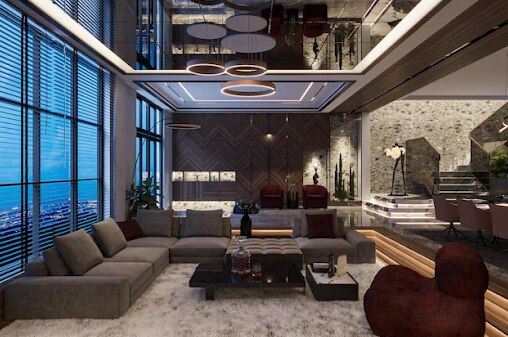 | Interior Solutions Cube Build Well delivers innovative and functional interior solutions tailored to residential, commercial, and corporate spaces. View product → |
Frequently asked questions
How can you optimize construction costs without compromising project requirements?
Define the required function first, then compare options against performance, reliability, installation, operating, maintenance and replacement costs rather than purchase price alone.
What should a construction cost baseline include?
Include design, materials, labour, equipment, logistics, installation, commissioning, permits, contingencies, operation, maintenance and replacement allowances, with costs assigned to specific work packages.
How do verified substitutions create construction savings?
Compare the proposed substitute with the specified item for capacity, dimensions, interfaces, codes, lead time, warranty, maintenance and whole-life cost before approval.
How should project teams rank potential cost savings?
Rank each saving by whole-life cost, performance impact, safety, programme risk, maintainability, operational consequences and the effort required to implement it.